
Few modern sports cars arrive with as much expectation attached to them as the Toyota Supra. The name carries decades of history, from long-distance grand tourers to motorsport icons, and the current car was launched into a conversation that had been running for years before it appeared. That history matters for styling, because owners are not starting with a blank canvas. They are starting with a car whose shape, proportions, and detailing already carry meaning, and any change will be judged against that background.
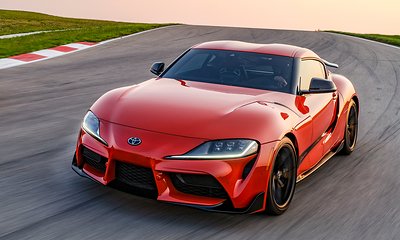
The current Supra is low, wide, and muscular, with a long bonnet, a short rear deck, and pronounced haunches over the rear wheels. It looks purposeful even when it is parked, and its surfacing is deliberately sculpted, with curves and creases that catch light in complex ways. Exterior additions must therefore work with that surfacing, rather than imposing a simpler, flatter design language on top of it. A part that ignores the car’s curves will look separate from the body, no matter how well it is made.
Reading the Car Before Changing It
The most useful first step is simply to look at the car from a distance, in daylight, and to notice where the eye travels. On a well-resolved sports car, the eye should move smoothly from the front bumper, along the front wing, through the door, and over the rear haunch to the tail. If a new part interrupts that journey, or creates a second focal point that competes with the headlights or the rear lights, the overall design can feel fragmented.
Balance, Airflow, and Honest Expectations
Aerodynamic styling invites strong claims, and owners should approach those claims with a healthy scepticism. A front splitter, side skirts, and a rear diffuser can influence airflow, and on a track, where speeds are sustained and consistent, those influences can be meaningful when the parts are designed and fitted as a system. On the road, where speeds vary and conditions change constantly, the effects are usually subtler, and the visual change is often the clearer result.
For owners researching a toyota supra body kit the practical test is coherence. Do the front, side, and rear elements share a design language? Do they follow the car’s existing lines? Do they leave cooling inlets, sensors, lights, and the exhaust system unobstructed? A package that answers those questions well is more likely to feel satisfying over time than one that promises a specific performance gain without evidence.
See also: Benefits of Using Crypto in Business
Why the Rear Haunches Deserve Respect
The rear haunches are one of the defining features of the Supra, and they deserve particular care. They give the car its wide, planted stance, and they frame the rear wheels in a way that suggests power even when the car is stationary. Side and rear parts that cut across the haunches, or that introduce a competing horizontal line at the wrong height, can weaken that effect. The best side treatments follow the lower edge of the body, below the haunch, and allow the upper surfacing to remain the dominant feature.
Materials, Finish, and the Importance of Edges
Material choice shapes both appearance and durability. Composite parts can offer a distinctive woven appearance and a precise, technical finish, but quality varies with lay-up, resin, edge sealing, and clear coat. A well-made part should show an even pattern, smooth edges, and a finish without bubbles, cloudiness, or waviness, even around curves and mounting points. A poorly made part may look acceptable in a photograph, but will reveal ripples, thin edges, or uneven gaps once it is fitted and viewed in daylight.
Fitment, Sensors, and Professional Installation
Fitment accuracy is critical, because small differences in model year, trim, and factory options can change brackets, sensors, and mounting points. A part made for one variant may not align on another, even when the cars appear similar in photographs. Before ordering, confirm the exact model designation, production period, and body details, and check whether parking sensors, cameras, or driver assistance systems are affected.
Professional fitting is often worthwhile, particularly for low front elements, wide side skirts, and rear parts that carry aerodynamic load. A skilled fitter can check panel gaps, secure fixings correctly, and identify alignment problems before they become visible faults. After fitting, lights, sensors, cameras, and the boot should be tested in daylight and after dark, and the car should be driven at varied speeds to check for wind noise, vibration, or movement. Any issue should be addressed promptly, rather than left until the next service.
Frequently Asked Questions
1. Will a styling package make a Supra noticeably faster?
Not in the way most owners hope. A package may improve stability and composure at higher speeds, but outright acceleration depends far more on power, weight, tyres, and gearing. The clearest benefit for most road users is appearance and confidence, rather than a measurable gain in straight-line speed.
2. How do I know if parts will fit my exact car?
Confirm the model, model year, trim, and any factory options that affect bumpers or trim, and ask the supplier to confirm suitability in writing. Share photographs of the relevant areas, and use a trial fit to check alignment, clearance, and sensor positions before final fixing. If anything remains unclear, seek professional advice before ordering.
3. Should new exterior parts be fitted professionally?
Professional fitting is advisable, particularly when bumper removal, precise alignment, or work near sensors is involved. A skilled fitter can achieve even gaps, use appropriate fixings, and confirm safety systems still function. Keep records of the work and ask about care and inspection intervals beforehand.
Conclusion
Styling the modern Supra rewards patience and restraint. By reading the car’s proportions first, choosing a coherent package that respects its surfacing, and insisting on precise fitment and a consistent finish, owners can sharpen its presence without losing the character that made it desirable in the first place. The goal should be a car that looks intentional from every angle, feels composed at speed, and remains practical and enjoyable in everyday use. When those conditions are met, the result feels like a natural extension of the original design, not an addition working against it, and that quiet coherence is the clearest sign of a good choice.


 By