
Electric vehicles have fundamentally changed the rules of fleet branding. What once was a straightforward conversation about vinyl wraps and color schemes has evolved into a technically demanding discipline that intersects materials science, thermal engineering, and sensor-driven safety systems. Fleet managers and brand designers who ignore these intersections risk costly rework, compromised vehicle safety, and degraded sensor performance. Understanding how low-surface-energy panels, battery heat zones, and ADAS sensor mapping interact with graphic installation is no longer optional — it is essential knowledge for anyone operating a modern electric fleet.
The Challenge of Low-Surface-Energy Panels on Modern EVs
Electric vehicles are increasingly manufactured using lightweight composite materials, thermoplastic polyolefins, and unpainted plastic panels designed to reduce overall vehicle weight and improve range efficiency. These materials share a common characteristic that creates significant headaches for fleet graphic installers: low surface energy. Unlike traditional steel or aluminum panels coated with standard automotive paint, low-surface-energy substrates resist adhesion at a molecular level. Standard pressure-sensitive vinyl adhesives simply do not bond reliably to these surfaces without proper preparation or specialized adhesive formulations.
The consequences of ignoring surface energy are not merely cosmetic. Premature edge lifting, bubble formation, and graphic delamination can occur within weeks of installation, particularly when the vehicle is exposed to temperature cycling, high-pressure washing, or highway wind loads. Installers working on EV fleets must conduct surface energy testing using dyne test pens or contact angle measurement before selecting adhesive systems. Primers specifically formulated for polyolefin substrates, combined with cast vinyl films rather than calendered alternatives, offer significantly improved long-term adhesion on these challenging surfaces.
Selecting the Right Vinyl System for EV Substrates
Cast vinyl films, by virtue of their manufacturing process, maintain dimensional stability across a wider temperature range and conform more effectively to complex curves without memory stress. For EV panels that flex slightly under load or thermal expansion, this conformability is critical. Pairing cast films with aggressive, repositionable adhesives designed for low-surface-energy applications gives installers the best combination of initial tack and long-term durability. Some manufacturers now offer adhesive systems with micro-structured channels that allow air to escape during installation, reducing the risk of trapped bubbles on textured or slightly porous composite surfaces.
Navigating Battery Heat Zones During Graphic Installation
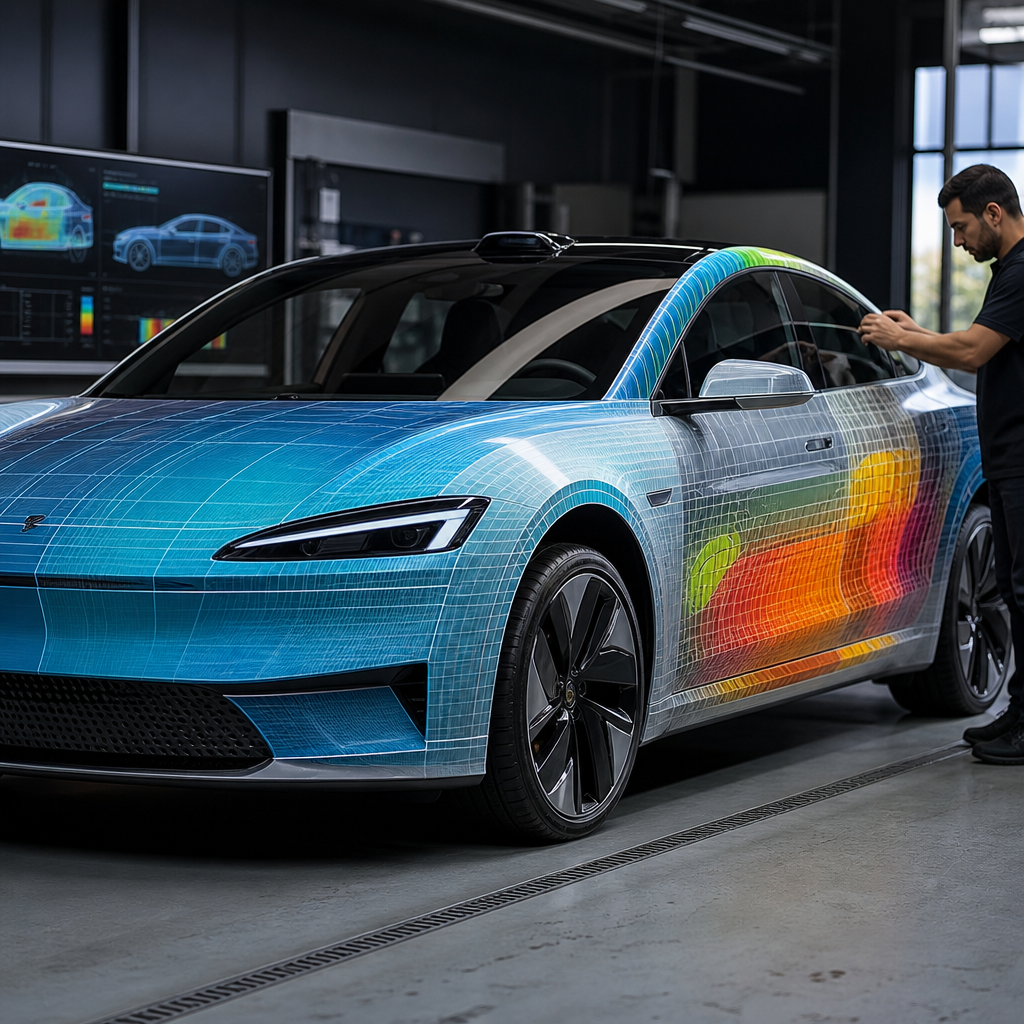
One of the most underappreciated technical challenges in EV fleet graphics is the thermal behavior of the vehicle’s underbody and lower side panels. Large-format battery packs generate significant heat during charging cycles and under heavy acceleration loads. This heat migrates through the vehicle structure and can elevate panel surface temperatures well beyond what traditional internal combustion engine vehicles produce in comparable zones. Vinyl films and adhesives have defined operating temperature ranges, and sustained exposure to temperatures exceeding those thresholds accelerates adhesive failure, causes film discoloration, and can permanently distort the graphic.
Before designing a wrap layout for any EV fleet vehicle, installers and brand managers should obtain thermal mapping data from the vehicle manufacturer or conduct their own surface temperature surveys using infrared thermometers during a controlled charge cycle. High-heat zones — typically concentrated along the lower rocker panels, rear quarter areas adjacent to battery management systems, and floor-adjacent door sills — should either be avoided in the graphic layout or addressed with heat-resistant film and adhesive combinations rated for sustained elevated temperatures. Designing the brand livery around these thermal constraints, rather than retrofitting solutions after the fact, produces far more durable and cost-effective results.
Thermal Management and Graphic Longevity
Some fleet operators have begun incorporating ceramic-infused vinyl overlaminates in high-heat zones. These products provide a modest degree of thermal insulation between the vehicle panel and the graphic film, extending service life in areas that would otherwise see premature failure. While not a universal solution, they represent a growing category of specialty products developed specifically in response to the thermal demands of electric vehicle platforms. Coordinating with a graphics supplier who understands EV-specific thermal behavior is increasingly a competitive differentiator for fleet branding programs.
ADAS Sensor Mapping and the No-Wrap Zones Every Designer Must Know
Advanced Driver Assistance Systems have introduced a new category of constraint that simply did not exist in fleet graphics a decade ago. Cameras, radar units, LiDAR arrays, and ultrasonic sensors are now embedded throughout the vehicle body — in bumpers, grilles, side mirrors, A-pillars, and rear fascias. Each of these sensors has a defined field of view and, critically, a sensitivity to surface reflectivity, color contrast, and material interference that can be disrupted by improperly placed vinyl graphics.
Radar sensors are particularly sensitive to metallic films, chrome finishes, and certain carbon-fiber-look wraps that can reflect or scatter radar signals. Camera-based systems rely on consistent ambient light interpretation, and high-contrast graphic elements placed near camera housings can create calibration drift or false-positive object detection. Fleet operators who have experienced unexplained ADAS warning lights or sensor recalibration requirements after graphic installations have often traced the issue back to vinyl placement within or adjacent to sensor detection zones. Understanding how to use network-level vehicle diagnostics and monitoring tools can help fleet managers identify sensor performance anomalies before they escalate into safety incidents or regulatory compliance issues.
Establishing Clear Sensor Exclusion Zones in Wrap Design
Best practice in ADAS-aware fleet graphic design begins with obtaining the vehicle manufacturer’s sensor location documentation and establishing defined exclusion zones in the wrap template before any creative work begins. These zones should be communicated clearly to the design team as hard boundaries, not suggestions. In many cases, the exclusion zones are relatively small and can be accommodated without significantly compromising the visual impact of the livery. The alternative — discovering sensor interference after installation — involves costly removal, potential sensor recalibration by a certified technician, and possible liability exposure if a safety incident occurs.
Craftsmen Industries: Engineering Fleet Graphics for the EV Era
Navigating the intersection of low-surface-energy substrates, battery thermal zones, and ADAS sensor constraints requires a graphics partner with deep technical expertise in electric vehicle platforms. Craftsmen Industries has developed specialized processes for addressing exactly these challenges. Their approach to fleet graphics for electric vehicles incorporates material selection protocols, thermal zone mapping, and sensor exclusion zone documentation as standard components of the project workflow — ensuring that brand liveries are not only visually compelling but structurally sound and safety-compliant across the full service life of the vehicle.
Brand Visibility in a Competitive Fleet Landscape
The stakes for fleet branding have never been higher. As electric vehicles become the dominant platform for commercial and service fleets, the brands that invest in technically sophisticated, durable graphic programs will distinguish themselves from competitors relying on outdated installation practices. Industry recognition programs, such as those highlighted by leading event marketing publications covering top fabricators and brand experience innovators, consistently recognize organizations that combine creative excellence with technical rigor — a standard that EV fleet graphics programs must now meet as a baseline expectation.
Conclusion
Electric vehicle fleet graphics represent a genuinely new discipline, one that demands equal parts creative vision and engineering discipline. Low-surface-energy panels require adhesive systems and film selections that go well beyond standard wrap practice. Battery heat zones impose thermal constraints that must be mapped and respected before a single panel is designed. ADAS sensor arrays create exclusion zones that are non-negotiable from both a safety and regulatory standpoint. Fleet operators and brand managers who approach EV graphics with this level of technical seriousness will build programs that last, perform, and protect — both the brand and the vehicle systems that keep drivers safe on the road.


 By

 By