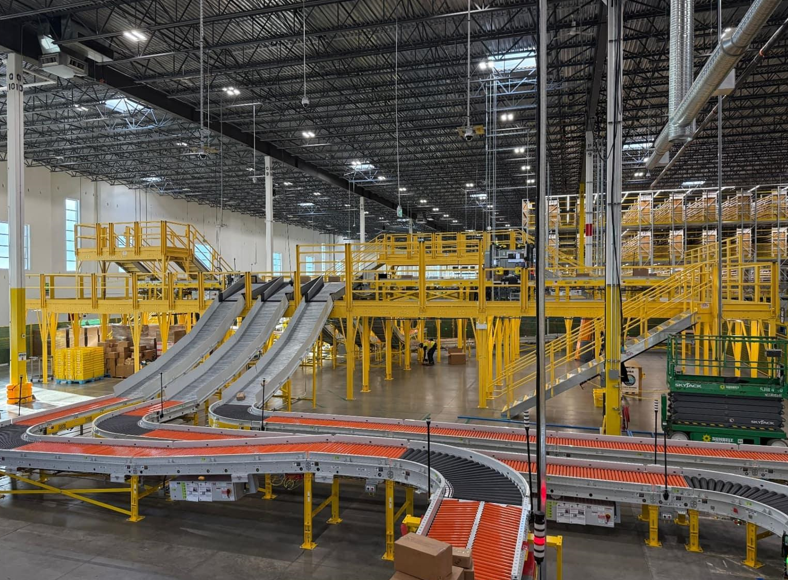

Walk into almost any large distribution center today and you’ll notice something different from five years ago: fewer people pushing carts across long aisles, and more machines quietly gliding between shelves on their own. AMR warehouse robots have moved from pilot projects to standard equipment for operations that need to move product faster without adding headcount. At MTLI, we’ve watched this shift happen in real facilities, not just in trade show demos, and the reasons behind it are more practical than flashy.
What Changed to Make This Happen Now
Autonomous mobile robots aren’t new technology. What’s new is how affordable and adaptable they’ve become. A decade ago, automating a warehouse meant tearing out the layout and installing fixed conveyor systems that took months to build and couldn’t be moved once they were in place.
That’s not the case anymore. Modern AMRs use cameras, lidar, and mapping software to navigate around people, pallets, and obstacles without any physical tracks or wires. They learn a facility’s layout, adjust when something changes, and can be redeployed to a different building if operations shift. That flexibility is the real reason adoption has picked up so quickly across distribution, retail fulfillment, and manufacturing.
Labor shortages pushed the timeline forward too. Warehouses in nearly every region have struggled to hire and keep pickers, especially for repetitive tasks like transporting totes from receiving to storage. Robots don’t solve every staffing problem, but they take the most physically repetitive walking out of the equation, which makes remaining roles more sustainable for the people doing them.
What Actually Changes on the Floor
It helps to be specific about what these robots do, because the term “warehouse robot” gets used loosely. Most AMRs handle transport, not picking. They carry shelves, totes, or pallets to a worker’s station instead of making the worker walk to the item. This is often called goods-to-person picking, and it’s the single biggest driver of the efficiency gains people talk about.
Instead of an associate walking an average of ten kilometers a shift, they stay in one spot while robots bring inventory to them in sequence. Order accuracy tends to improve too, since the system tells the worker exactly which item to grab and confirms the pick before moving to the next task.
Some AMRs also handle replenishment, moving stock from bulk storage to forward picking zones during off-peak hours so shelves are ready when the next shift starts. Others are built for sortation, directing packages to the right outbound lane based on destination or carrier.
None of this works well without proper planning around layout, charging infrastructure, and how robots interact with existing racking and conveyor systems. This is where a lot of automation projects stumble. Businesses buy the robots but underestimate the facility changes needed to support them, which is one reason working with an experienced warehouse automation company from the design stage matters more than people expect.
The Labor Cost Conversation Is More Nuanced Than It Sounds
Reducing labor costs is usually the first benefit mentioned in any AMR pitch, and it’s not wrong, but it’s often oversimplified. Robots reduce the number of walking-heavy tasks that require staffing, and that does lower labor spend per unit shipped. What it doesn’t do is eliminate the need for people.
Someone still has to pick items off the shelf a robot brings over. Someone still handles quality checks, exceptions, damaged goods, and returns. Maintenance technicians are now part of the staffing plan too, since fleets of robots need charging schedules, software updates, and occasional repairs.
The honest way to describe the labor impact is that AMRs shift the type of work rather than remove it entirely. Facilities typically need fewer general laborers for transport tasks and more technically skilled staff for oversight and maintenance. That’s a real cost saving over time, especially during peak seasons when temporary staffing becomes expensive and unreliable, but it’s not the same as running a warehouse with a skeleton crew.
There’s also a ramp-up period most vendors don’t talk about enough. Throughput often dips slightly during the first few weeks after deployment while staff learn new workflows and the robots build out their maps of the facility. Operations that plan for this adjustment period get better long-term results than those expecting immediate gains from day one.
Where AMRs Fall Short
It’s fair to be a little skeptical of some of the marketing around this technology. AMRs are excellent at repetitive, predictable transport tasks in structured environments. They’re less effective in cluttered facilities with narrow aisles, inconsistent flooring, or highly irregular inventory shapes.
Battery life and charging infrastructure are still limiting factors for high-volume operations running multiple shifts. Fleet size has to be calculated carefully, because too few robots creates bottlenecks and too many adds unnecessary cost and floor congestion.
Integration with existing warehouse management software is another area where projects run into friction. Robots need to talk to the systems already tracking inventory and orders, and older WMS platforms sometimes require custom middleware to make that connection work smoothly. Skipping this step during planning is a common and expensive mistake.
None of these limitations make AMRs a bad investment. They just mean the technology performs best when it’s matched to the right type of operation and implemented with a clear understanding of the facility’s existing constraints, rather than treated as a universal fix.
Getting the Rollout Right
The businesses that see the strongest results from AMRs usually follow a similar pattern. They start with a smaller pilot zone instead of automating the entire facility at once. They involve floor staff early, since workers who understand the day-to-day workflow often catch layout problems that planners miss on paper.
They also treat this as an ongoing project rather than a one-time purchase. Robot fleets need periodic route optimization as order patterns shift with seasons or new product lines. Facilities that revisit their automation setup every few months tend to keep improving throughput, while those that install robots and leave the configuration untouched often see performance plateau within the first year.
Choosing the right partner matters just as much as choosing the right robots. A vendor who only sells hardware won’t necessarily understand your racking layout, dock flow, or electrical capacity. Working with a team that handles the construction, racking, and controls side alongside the automation itself tends to produce a smoother rollout with fewer surprises. If you’re evaluating options for your own facility and want an honest assessment of what would actually work for your layout, it’s worth taking the time to get in touch before committing to a specific system.
See also: Benefits of Smart Contracts in Business
A Realistic Way to Think About Adoption
AMR warehouse robots aren’t going away, and the pace of adoption is only going to increase as the technology gets cheaper and easier to deploy. But the businesses getting the most value from them aren’t the ones chasing the newest robot on the market. They’re the ones who took the time to understand their own operational bottlenecks first and matched the technology to an actual problem.
Efficiency gains and lower labor costs are real outcomes, but they show up gradually and depend heavily on how well the rollout is planned. Facilities that treat automation as a long-term operational shift, not a quick fix, are the ones still running these systems successfully years later.
MTLI has worked on warehouse automation, racking, and facility transition projects across a wide range of industries, and the pattern holds true in nearly every case: planning and integration determine success more than the robots themselves. If you’re weighing whether AMRs make sense for your operation, contact us today and we can walk through what a realistic rollout would look like for your facility.


 By
By