
Technology advances in propulsion, life support, and autonomy are converging to enable Moon and Mars ambitions. Modular, upgradeable architectures reduce mass while boosting resilience; microgravity materials and propulsion miniaturization support lighter, more reliable spacecraft. Autonomous systems ease crew workload and improve safety, backed by robust power and standardized interfaces. Together, these pillars shape scalable exploration and sustained presence, offering a practical path forward even as questions about costs, policy, and partnerships persist. The next steps hinge on integration and risk management.
How Technology Opens the Path to Interplanetary Travel
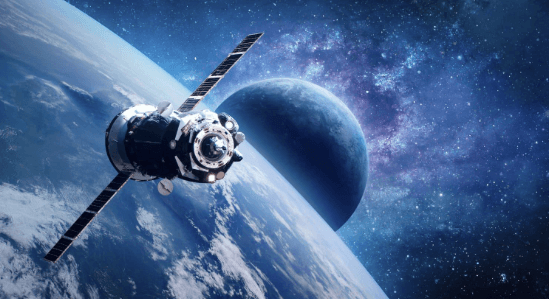
Technology underpins the feasibility of interplanetary travel by advancing propulsion, life support, and autonomous systems to near-term readiness.
The analysis highlights microgravity materials and propulsion miniaturization as pivotal enablers, reducing mass, increasing reliability, and enabling flexible architectures.
Progress yields scalable modules, streamlined logistics, and safer crewed missions, while maintaining freedom-oriented engineering culture that prioritizes robust autonomy and modular, upgradeable systems for expansive, adaptive exploration.
Key Tech Pillars Driving Moon and Mars Missions
Key tech pillars guiding Moon and Mars missions include propulsion efficiency, life-support resilience, and autonomous systems that reduce crew workload and risk.
Focusing on power systems and robust life support, the approach emphasizes modular, fault-tolerant architectures, deep-space reliability, and energy-dense propulsion trade-offs.
Forward-looking, technically precise analysis highlights continual optimization, standardized interfaces, and autonomous fault management enabling sustainable, freedom-first exploration trajectories.
The Roles of AI, Robotics, and In-Situ Resource Utilization
Artificial intelligence, robotics, and in-situ resource utilization (ISRU) form a tripartite framework that enhances autonomy, resilience, and sustainability in deep-space missions.
The analysis addresses AI ethics within autonomous systems and the governance of decision loops, while robotics autonomy advances fault tolerance, maintenance, and exploration throughput.
ISRU optimizes resource cycles, reducing delays and enabling resilient, fuel-efficient, long-duration missions beyond Earth’s vicinity.
From Policy to Profit: Decoding Collaboration, Costs, and Commercial Potential
What governs the path from policy to profit in space ventures hinges on transparent collaboration models, cost accountability, and clear routes to commercial viability. The analysis identifies policy pitfalls and governance gaps that distort funding signals and delay investment. Effective frameworks reveal profit pathways, aligning public incentives with private capital through standardized licensing, interoperable interfaces, and predictable risk-sharing across international partners.
Frequently Asked Questions
What About Human Health Risks in Long-Duration Spaceflight?
Human health in long duration spaceflight risks includes musculoskeletal deconditioning, bone density loss, radiation exposure, and neurovestibular disruption; mitigation relies on countermeasures, monitoring, and autonomous healthcare, enabling sustainable exploration while prioritizing astronaut safety and mission continuity.
How Will Space Debris Affect Interplanetary Mission Routes?
Space debris complicates interplanetary routing by increasing collision risk and necessitating dynamic trajectory adjustments, debris-avoidance maneuvers, and robust shielding. Mission planners prioritize redundancy and modeled risk, aiming for resilient, freedom-valuing routes with minimal propulsion penalties.
Can Private Companies Guarantee Mission Insurance and Liability?
Private companies cannot guarantee mission insurance and liability outright; they offer indemnities and reinsurance frameworks, while financing autonomy shifts risk transfer to specialized instruments and partners, creating structured resilience but leaving residual exposure subject to regulatory and market dynamics.
What Ethical Standards Govern Planetary Resource Exploitation?
“Look before you leap.” Ethical governance and resource ethics frame planetary exploitation, emphasizing accountable stewardship, transparent governance mechanisms, and equitable benefit-sharing to safeguard celestial environments while enabling sustainable, freedom-respecting private and public initiatives.
See also: Technology Beyond Earth Exploration
How Will Interplanetary Missions Be Governed by International Law?
Intergovernmental treaties will shape interplanetary mission oversight, with space governance evolving through treaty creation, dispute resolution, and common norms. They will balance exploration freedom with safety, transparency, and accountability, enabling ambitious yet regulated, forward-looking activities across jurisdictions.
Conclusion
In the theater of exploration, technology is the seasoned stagehand lighting the path to distant moons and red deserts. ASPs and AI are the compass and clock, robotics the tireless courier, ISRU the spare fuel tucked in the wall. Modular designs and robust power systems form the scaffolding, enabling iterative progress. The curtain rises on sustainable, scalable missions, where policy, partners, and profit harmonize, guiding humanity from harbor to horizon with measured, precise steps.


 By
By
 By
By